

 Speakers
Recognizing Leadership Qualities
Leadership comes in many forms. In the family, a father is considered the leader of the home; in team sports, the captain or skipper is considered the leader of the team; while the CEO or manager is considered the leader in a company or organizations. The leaders in all three examples have something in common, which is that they guide, manage, and direct others to accomplish different tasks. In the case of the father, his work is to ensure everybody is taken care of in the family financially and otherwise. That of the captain of a team sport is to ensure the other members of his or her team effectively carry out their jobs, and the team wins every match they play. While the job of the CEO or manager is to ensure all employees do their jobs properly and the company is always making a profit.
Why Choose a Leadership Keynote Speaker?
Hiring a leadership keynote speaker is an investment in your team’s future. Our speakers deliver more than just inspiration; they provide actionable frameworks, psychology-backed strategies, and practical tools to develop stronger leaders, foster cohesive teams, and navigate organizational change. From enhancing emotional intelligence to building resilience, our speakers adapt their message to your specific challenges, ensuring a lasting impact that extends far beyond the event itself. Empower your leaders to drive growth, boost engagement, and cultivate a thriving workplace culture.
Inspire & Develop Your Team: Our Top Leadership Speakers
Explore Category
Collaboration |Communication |Conflict Management |Corporate Culture |Diversity and Inclusion |Emotional Intelligence |Employee Engagement |Gender Issues |Generational Differences |Human Resources |Leadership Keynote Speakers |Team Building |Teamwork |







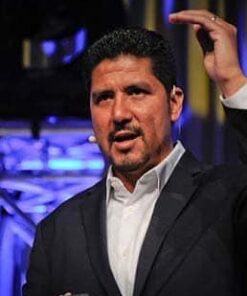

Expert On Emotional Intelligence, Dealing With Change, Building Teams & Becoming A Great Leader.
Quick View
In general, a person with strong leadership qualities has the capability of making planned and visionary goals and convincing others to pursue these goals. A leader does this by setting specific goals and then motivating others and instilling in them the desire to succeed and achieve those goals. A good leader does not only talk the talk, but he also walks the walk by ensuring he steps up in periods of crisis, and can think creatively in dire situations.
Increase Your Leadership Skills
There are individuals who are what they call natural born leaders; probably due to the fact of where they grew up or their past experiences, they developed strong leadership skills. However, the good thing is that everybody can learn and improve their leadership skills through proper mentoring, guidance, and coaching by individuals who have vast leadership skills. These individuals are known as leadership speakers; they lecture people on various leadership skills and how to become effective leaders. They also help people hone their leadership skills so as to become better leaders.WHAT OUR CLIENTS ARE SAYING
“Allan provided a great presentation that kept everyone in the room engaged in the learning process. His colorful story of a real-life adventure was used to demonstrate differences in leadership styles and the ultimate outcomes. I would highly recommend Allan as a speaker to inject a positive energy into any group.”
CEO Consulting Engineers of Alberta
"This program was a great way to kick off our conference. His passion and energy, combined with his knowledge of EQ in business make him a unique and powerful speaker - our executives were impressed and we are definitely going to invite him back."Concentra Medical Centers
"Bill was a very entertaining speaker who everyone loved. His stories shared great life experiences that could be felt by all. A great speaker who could be listened to over and over. My managers were impressed by his performance." Wilsons
"By customizing your package to our audience, you instantly captured their attention." Pharmasave Drugs
How to Book Your Leadership Speaker
- Reach out with your date, audience, and budget, or request availability for a specific speaker. You’ll receive a proposal you can circulate internally, with each speaker’s fees, topics, and videos in one document.
- Found the right fit? We take your offer to the speaker’s team and look after the contracting details on your behalf.
- Your dedicated logistics manager then guides the rest: a pre-event call with your speaker, coordination of requirements, and a final check that your speaker is fully prepared.
Frequently Asked Questions About Leadership Speakers
1. Every speaker seems to cover leadership. How do we find one with something to say?
Leadership is the most crowded shelf in the speaking world, which makes generic talks the biggest risk in the category. The filter that works: ask what the speaker’s specific claim is. Strong candidates can state their argument in a sentence, whether that’s a contrarian take on accountability, a research finding about trust, or a hard-won lesson from a particular crisis. Weak ones offer “insights on leadership.” Watch a full talk and count how many minutes pass before you hear something you couldn’t have predicted. If the answer is never, keep looking.
2. We already use an internal leadership framework. Should the speaker align with it?
Complement it rather than duplicate it. A speaker who simply restates your competency model in different words wastes the booking, while one who contradicts it outright creates confusion your managers will have to clean up. The productive middle ground is a speaker whose message deepens one or two pillars of your framework from an outside angle, giving your existing language new stories and evidence to stand on. Share the framework during the briefing and ask the speaker directly where their material connects with it and where it pushes.
3. Do emerging managers and senior executives need different leadership speakers?
Usually, yes, because the two groups are solving different problems. First-time managers need the fundamentals made vivid: giving feedback, delegating, surviving the shift from doing the work to leading it. Senior executives have heard the fundamentals for twenty years; they respond to speakers who challenge their assumptions, address strategic loneliness, or bring an outside vantage they can’t get internally. A talk pitched at one level tends to bore or bewilder the other. If your event mixes both, tell the speaker, and expect the strongest ones to aim deliberately rather than splitting the difference.
4. We’re launching a year-long leadership development program. Where does a speaker fit best?
Two spots earn their cost. A launch keynote gives the program a memorable opening argument and shared vocabulary that internal facilitators can reference for months, which is worth more than the hour it takes. The other high-value spot is the midpoint, when energy sags and a fresh outside voice restores momentum. What works less well is a speaker parachuted into the closing session with no connection to what came before. Wherever the talk lands, brief the speaker on the program’s content so the keynote feels like part of it, not a visiting act.
5. Would a moderated panel of leaders work better than a single keynote?
They do different jobs. A panel offers range: several perspectives, real disagreement, and the credibility of hearing peers rather than a professional presenter. Its weakness is diffusion, since panels rarely leave a room with one clear idea, and a flat moderator sinks the format entirely. A keynote delivers a single argument with craft and momentum. The strongest conference designs use both, with a keynote setting the theme and a panel testing it against local reality. If you go panel, invest in the moderator; that role decides everything.
6. Our leaders are volunteer board members, not employees. Does that change the speaker choice?
It should. Volunteer boards and chapter leaders can’t be managed through pay or promotion, so leadership content built on corporate levers misses them. What lands with this audience is material on motivating people who can walk away, running effective meetings with limited time, succession when nobody wants the chair, and governance without bureaucracy. Associations book leadership speakers constantly, and several on the roster keep a version of their talk built for exactly this room. Name the audience as volunteer leadership from the first conversation.